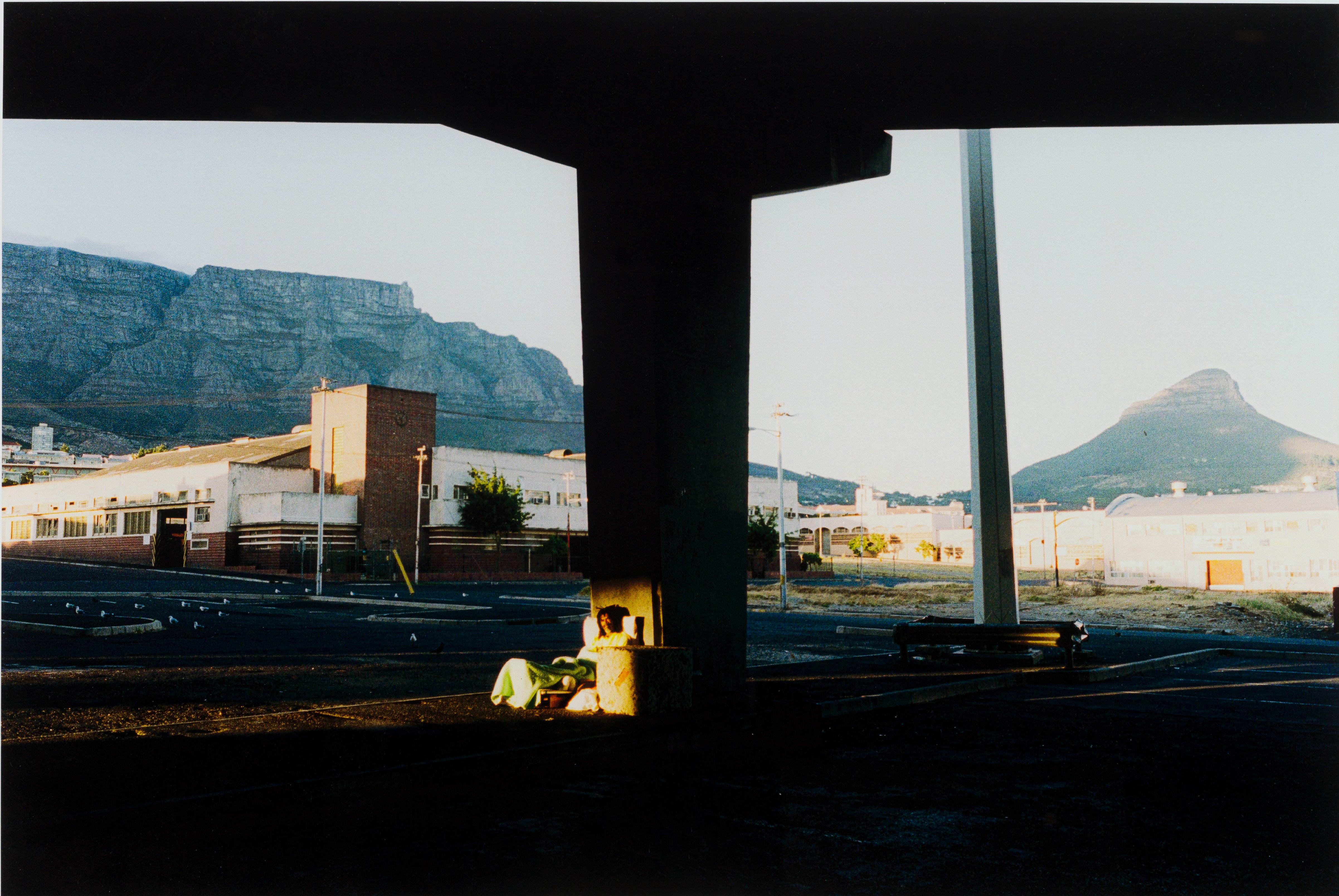
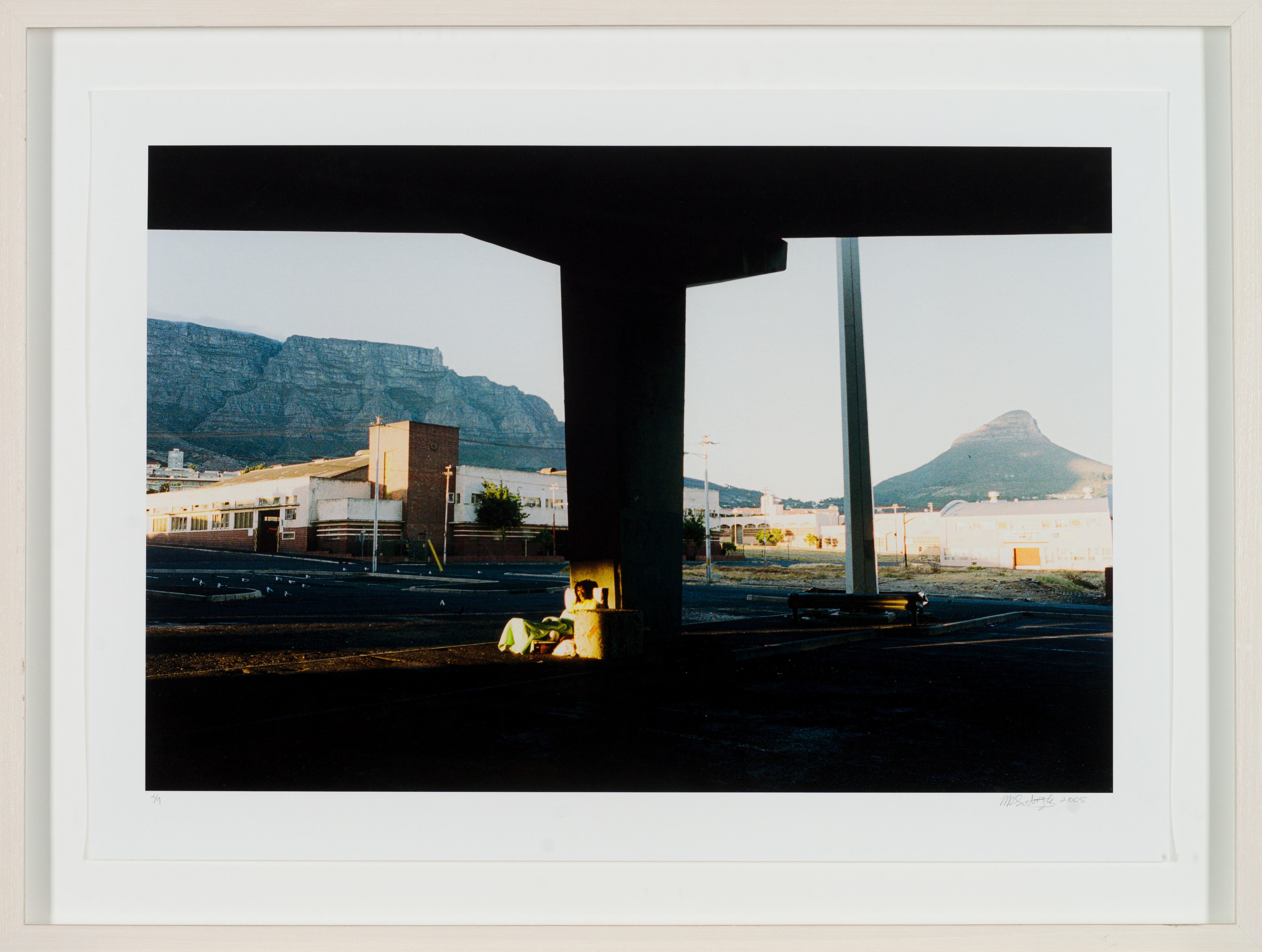
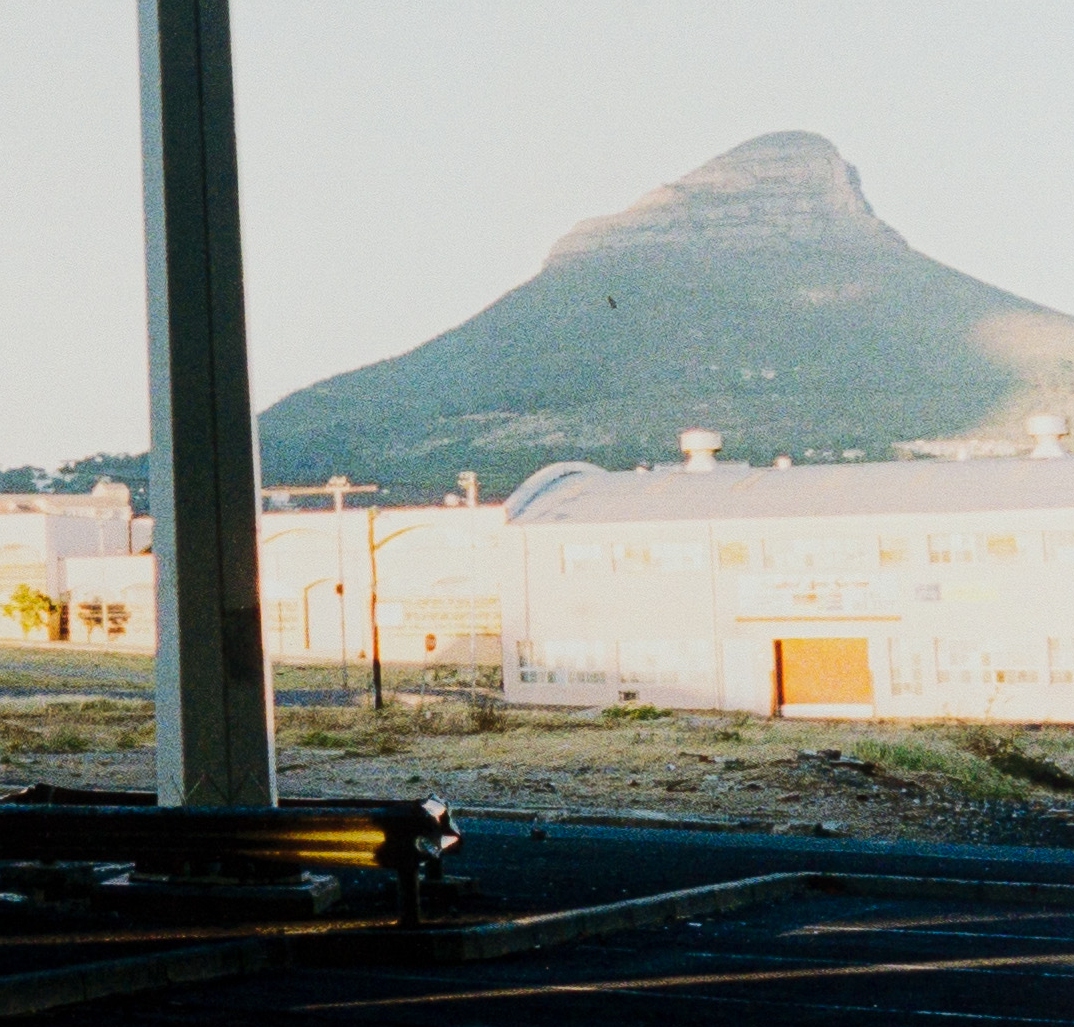
Joe, Cape Town Foreshore ,2005
Provenienza :
Exhibited : Goodman Gallery, Johannesburg, Die Vier Hoeke and Umjiegwana, 2006.
Note : The work is from the series Umjiegwana (The Outside). This body of work was created as a counterpoint to Subotzky's first photographic series Die Vier Hoeke, which examined life and conditions inside Pollsmoor Prison (Cape Town). In Umjiegwana, Subotzky followed up with several former inmates he had kept in contact with.
Umjiegwana: The Outside
According to their myth of origin, South Africa’s prison gangs were founded by two nineteenth century bandits, Nongoloza and Kilikijan. They were young and black and proud, and they become bandits because stealing the white man’s gold was better than going underground to dig it up.
Eventually, the myth continues, both were hunted down and captured. Together, they invented a language fit for a life of captivity. Being men of the caves and the hills, their prison language bore their fantasies of the outdoors. Everything expanded. A day was called a year. An overcrowded cell became a vast highveld plain. But to prevent themselves from being carried away into madness, they reminded themselves every day that they were in fact binne die vier hoeke, and not Umjiegwana – outside. These two concepts became the touchstones of their language.
Today, in 2006, the relationship between language and place has been folded inside out. On the streets of the Cape Flats, the words of Die Vier Hoeke are used to talk of Umjiegwana. Young men describe the politics and spaces of their ghettos in prison language, neighbourhoods thus become jails, each piece of drug turf a massive prison cell of the initiated … In their neighbourhoods, Die Vier Hoeke and Umjiegwana have been mixed up, for they have come to form equal parts of lived experience … About four out of five of these people will spend the first half their adult lives in and out of prison, taking Umjiegwana to Die Vier Hoeke, and Die Vier Hoeke to Umjeigwana.
Jonny Steinberg