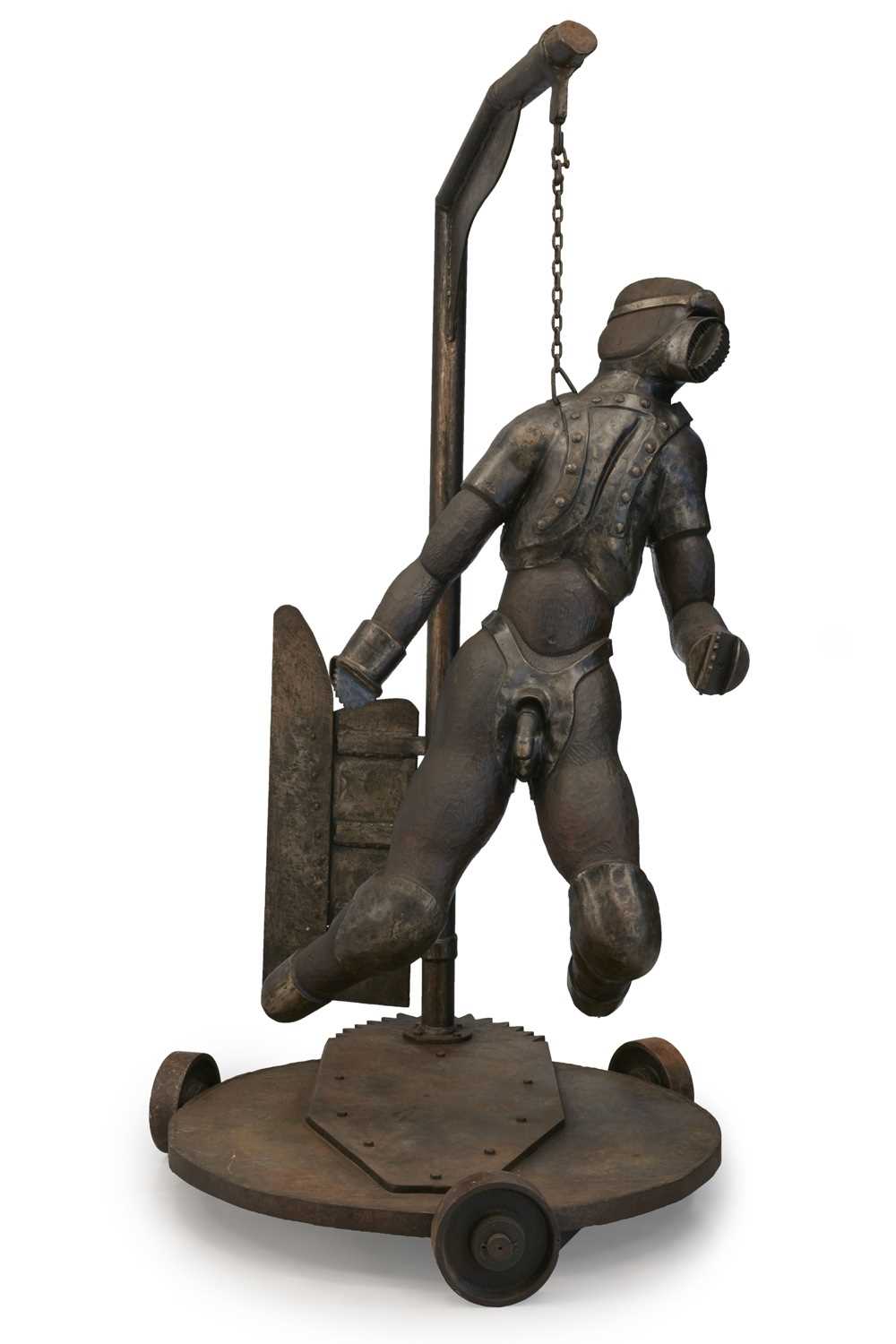
Hanging Man ,1982
Provenance :
Exhibited :
Literature :
Notes : David Brown’s untimely death last year, aged just 65, robbed the South African art landscape of one of its most characteristic features. His sculptures, especially his large-scale works in wood and metal, are almost definitive of a certain narrative within South African art from the high apartheid era to its immediate aftermath. Brown typically brought a macabre humour to his large scale sculptures, along with their hints of grotesquerie and chimera, all set in an implicitly political context.Hanging Man, an early work in wood and metal, is rather less humorous than later work. Brown relates the story of creating the work in his studio, which was located on the fringes of what had been District Six in Cape Town. After the populace of the area had been forcibly removed by the apartheid state, derelicts and the homeless remained, many of whom Brown befriended. One such homeless man, on inspecting the sculpture, declared that it reminded him of ‘death in detention’.Whether or not Brown intended the allusion, the creation of such a monumental chimeric figure must have presented a clear symbolic challenge to the warped security apparatus of the apartheid state, where deaths in detention were common currency. Hanging Man gestures to the importance of the figure of the dog in Brown’s oeuvre, with the snout like, muzzled face as in Spiked Animal (1980) in the South African National Gallery’s Permanent Collection. The missing extremities of the suspended figure, capped with metal in monstrous new appendages, hints at both torture and the reduction of the human to an animal-like state. The figure hangs by a rough chain from an elaborate metal gallows, the most recognisable symbol of the extension of state power over the individual. Though more confrontational than much later work, this early piece by Brown is an important historical and aesthetic statement.
James Sey
Condition_report :